Magna Carta: the liberties of the cities
You are typing on the on-screen keyboard. Tap the text to open it and begin.
Caps Lock is on. Every letter comes out capital, so the test counts it as a mistake.
Or simply start typing.
- Time so far
- 0
- Words per minute
- 0
- Accuracy
- 100%
Done. The text and your result
0 % of characters hit
Where you slip most often
Darker keys collected more mistakes in this run.
What slowed you down
The characters your finger missed most often.
Your recent results
Words per minute across your recent runs in this language.
What to type next
 Law and constitutionsBill of Rights: the First AmendmentUnited States Congress, published 1791The article that covers religion, speech, the press, assembly, and petition in a single sentence.medium272 characters
 ProseLittle Women, the gray dawn of ChristmasLouisa May Alcott, published 1868Jo wakes early on Christmas morning and finds the gift her mother promised.easy363 characters
 ProseEmma, the view from Donwell AbbeyJane Austen, published 1815A summer view of English fields and gardens from the grounds of Donwell Abbey.hard340 characters
King John sealed the charter in a meadow at Runnymede on June 15, 1215, after his barons pressed him to accept written limits. Four copies of the 1215 charter survive, two of them in the British Library. Clause thirteen protects the ancient liberties of London and extends the same promise to every other city, borough, town, and port. The English wording here was made by William Sharp McKechnie and printed in 1915.
Where this text comes fromThe clause numbers are not medieval. The 1215 charter was written as continuous Latin with no divisions at all, and the numbering you see here belongs to later editors who cut it into clauses for teaching and citation. The page linked below comes from a book of source problems assembled for history students, which is why the English is smooth and modern rather than literal: it was made to be read by undergraduates, not to reproduce the syntax of the original. Read it as a working translation, not as the charter itself.
What you might not noticeThe clause protects liberties as well by land as by water, putting river trade on the same footing as roads, which is why ports appear in the same list as cities, boroughs and towns. Source
What it trainsThe passage opens with a number, 13 followed by a full stop, which means your very first keystroke is on the number row before your hands have settled into the letter rows. Almost nothing else on this shelf starts that way. After that the difficulty is a list: cities, boroughs, towns, and ports, five commas in 43 words, with the same phrase about liberties and free customs repeated at both ends of the clause. Repetition is where accuracy slips, because the second time through the eye recognizes the shape and stops reading the letters.
From our blogHow to Learn Touch Typing Without Bad Habits
Public domain status: an official document, outside copyright protection. public domain, Wikisource
More texts in this category
Law and constitutionsBill of Rights: the First AmendmentUnited States Congress, published 1791The article that covers religion, speech, the press, assembly, and petition in a single sentence.medium272 characters
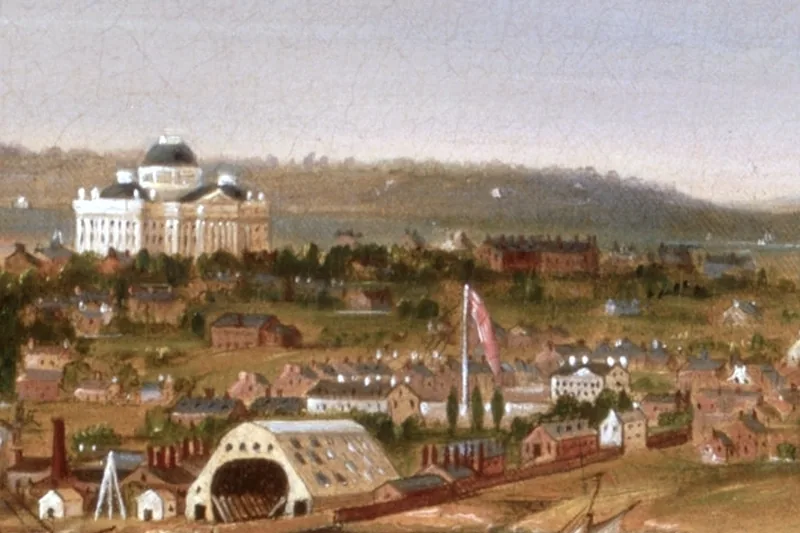 Law and constitutionsBill of Rights: the Fourth AmendmentUnited States Congress, published 1791The rule that searches need probable cause and a warrant naming the place and the things.hard332 characters
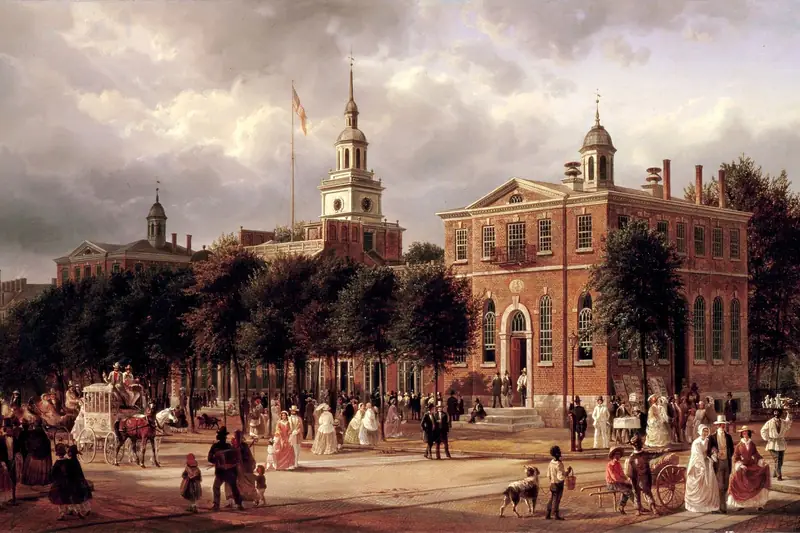 Law and constitutionsDeclaration of Independence: unalienable rightsSecond Continental Congress, published 1776The single sentence on equality and unalienable rights that the whole document rests on.hard212 characters
Law and constitutionsHuman Rights Declaration, Articles 1 and 2United Nations General Assembly, published 1948The two opening articles, on dignity and reason and on rights without distinction.hard431 characters
Law and constitutionsDeclaration of Independence: unalienable rightsSecond Continental Congress, published 1776The single sentence on equality and unalienable rights that the whole document rests on.hard212 characters
Law and constitutionsHuman Rights Declaration, Articles 1 and 2United Nations General Assembly, published 1948The two opening articles, on dignity and reason and on rights without distinction.hard431 characters
 Law and constitutionsUS Constitution, Article III: the courtsConstitutional Convention, published 1787The clause that creates the Supreme Court and protects the standing of judges.hard405 characters
 Law and constitutionsUS Constitution, Article VI: the supreme lawConstitutional Convention, published 1787The supremacy clause, binding judges in every state to the Constitution, federal law, and treaties.medium359 characters