US Constitution, Article VI: the supreme law
You are typing on the on-screen keyboard. Tap the text to open it and begin.
Caps Lock is on. Every letter comes out capital, so the test counts it as a mistake.
Or simply start typing.
- Time so far
- 0
- Words per minute
- 0
- Accuracy
- 100%
Done. The text and your result
0 % of characters hit
Where you slip most often
Darker keys collected more mistakes in this run.
What slowed you down
The characters your finger missed most often.
Your recent results
Words per minute across your recent runs in this language.
What to type next
 Law and constitutionsUS Constitution, Article III: the courtsConstitutional Convention, published 1787The clause that creates the Supreme Court and protects the standing of judges.hard405 characters
 Law and constitutionsBill of Rights: the First AmendmentUnited States Congress, published 1791The article that covers religion, speech, the press, assembly, and petition in a single sentence.medium272 characters
 ProseLittle Women, the gray dawn of ChristmasLouisa May Alcott, published 1868Jo wakes early on Christmas morning and finds the gift her mother promised.easy363 characters
Lawyers call this passage the supremacy clause. It makes the Constitution, federal statutes and treaties binding on judges in every state, whatever state law says. The same article promises that debts contracted under the Confederation stay valid, and it ends by ruling out any religious test for federal office. Article VI is one of the shortest articles in the document.
Where this text comes fromRead closely, the clause does not address legislatures at all. It speaks to judges, and specifically to judges in every state, telling them which law to apply when two conflict. That choice of audience is the whole mechanism: the drafters could not stop a state from passing a law, so they aimed at the courtroom where that law would have to be enforced. The copy linked below is the House of Representatives text, which keeps the capitalization of 1787 rather than modernizing it.
What you might not noticeThe clause binds judges in every state, and the 1787 text says so in the phrase any Thing in the Constitution or Laws of any State to the Contrary notwithstanding, capitalizing Thing and Contrary along with everything else it considers important. Source
What it trainsSixty-four words, one sentence, one full stop at the very end. Two semicolons carry the whole structure, and if you lose the thread after the first one there is nothing to bring you back. Seventeen of the eighteen capital letters sit inside the sentence, heavy but not the heaviest here: the apportionment clause on this shelf runs twenty-eight capitals inside a single sentence. Five commas are all the further help you get. The word to watch is notwithstanding: fifteen letters, no hyphen, no break, arriving right at the end when attention has already dropped, and it is the only word here that most people have never typed before.
From our blogHow to Learn Touch Typing Without Bad Habits
Public domain status: an official document, outside copyright protection. public domain, Wikisource
More texts in this category
Law and constitutionsBill of Rights: the First AmendmentUnited States Congress, published 1791The article that covers religion, speech, the press, assembly, and petition in a single sentence.medium272 characters
 Law and constitutionsBill of Rights: the Fourth AmendmentUnited States Congress, published 1791The rule that searches need probable cause and a warrant naming the place and the things.hard332 characters
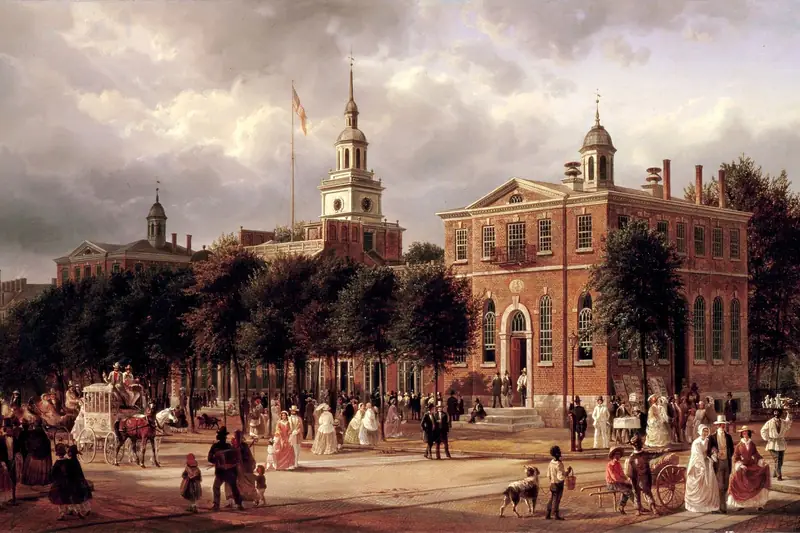 Law and constitutionsDeclaration of Independence: unalienable rightsSecond Continental Congress, published 1776The single sentence on equality and unalienable rights that the whole document rests on.hard212 characters
Law and constitutionsMagna Carta: the liberties of the citiesKing John of England, published 1215The clause granting London and every other town and port their ancient liberties and free customs.medium242 characters
Law and constitutionsHuman Rights Declaration, Articles 1 and 2United Nations General Assembly, published 1948The two opening articles, on dignity and reason and on rights without distinction.hard431 characters
Law and constitutionsUS Constitution, Article III: the courtsConstitutional Convention, published 1787The clause that creates the Supreme Court and protects the standing of judges.hard405 characters
Law and constitutionsDeclaration of Independence: unalienable rightsSecond Continental Congress, published 1776The single sentence on equality and unalienable rights that the whole document rests on.hard212 characters
Law and constitutionsMagna Carta: the liberties of the citiesKing John of England, published 1215The clause granting London and every other town and port their ancient liberties and free customs.medium242 characters
Law and constitutionsHuman Rights Declaration, Articles 1 and 2United Nations General Assembly, published 1948The two opening articles, on dignity and reason and on rights without distinction.hard431 characters
Law and constitutionsUS Constitution, Article III: the courtsConstitutional Convention, published 1787The clause that creates the Supreme Court and protects the standing of judges.hard405 characters