Bill of Rights: the Fourth Amendment
You are typing on the on-screen keyboard. Tap the text to open it and begin.
Caps Lock is on. Every letter comes out capital, so the test counts it as a mistake.
Or simply start typing.
- Time so far
- 0
- Words per minute
- 0
- Accuracy
- 100%
Done. The text and your result
0 % of characters hit
Where you slip most often
Darker keys collected more mistakes in this run.
What slowed you down
The characters your finger missed most often.
Your recent results
Words per minute across your recent runs in this language.
What to type next
 Law and constitutionsBill of Rights: the First AmendmentUnited States Congress, published 1791The article that covers religion, speech, the press, assembly, and petition in a single sentence.medium272 characters
 Law and constitutionsDeclaration of Independence: unalienable rightsSecond Continental Congress, published 1776The single sentence on equality and unalienable rights that the whole document rests on.hard212 characters
 ProseLittle Women, the gray dawn of ChristmasLouisa May Alcott, published 1868Jo wakes early on Christmas morning and finds the gift her mother promised.easy363 characters
The Fourth Amendment answers a colonial grievance about the open-ended search papers, called writs of assistance, that James Otis argued against in 1761. John Adams later said American independence began in the Boston court room where Otis spoke. The text demands probable cause and a warrant that names the place to be searched and the things to be seized. The printing used here comes from the first volume of the United States Statutes at Large.
Where this text comes fromIts structure is worth noticing before you type it: one sentence, split by a single semicolon into two halves that do entirely different jobs. The first half states a right and names what it covers. The second half sets the only condition under which that right may be set aside, and it does so by describing what a piece of paper must contain rather than what an officer may believe. That is an unusual way to write a protection. Most rights of the period are phrased as prohibitions on government; this one is phrased as a specification for a document.
What you might not noticeThe four things protected are named as persons, houses, papers, and effects. That list was written for a world of physical objects, and every argument about searching anything else has had to work outwards from those four words. Source
What it trainsOne capital letter in the entire passage, at the very beginning, and after it the Shift key is never needed again: on the US layout the nine commas, the single semicolon and the full stop all sit unshifted. That works out at roughly every sixth word closing a clause across fifty-four words, and the danger is the opposite of the Constitution passages here. Nothing forces you to slow down, so people speed up and start dropping the marks entirely. Two words tie for longest at twelve letters, unreasonable and particularly, and they sit at opposite ends of the sentence, so the hardest spelling arrives twice with the whole clause chain in between.
From our blogHow to Learn Touch Typing Without Bad Habits
Public domain status: an official document, outside copyright protection. public domain, Wikisource
More texts in this category
Law and constitutionsBill of Rights: the First AmendmentUnited States Congress, published 1791The article that covers religion, speech, the press, assembly, and petition in a single sentence.medium272 characters
Law and constitutionsDeclaration of Independence: unalienable rightsSecond Continental Congress, published 1776The single sentence on equality and unalienable rights that the whole document rests on.hard212 characters
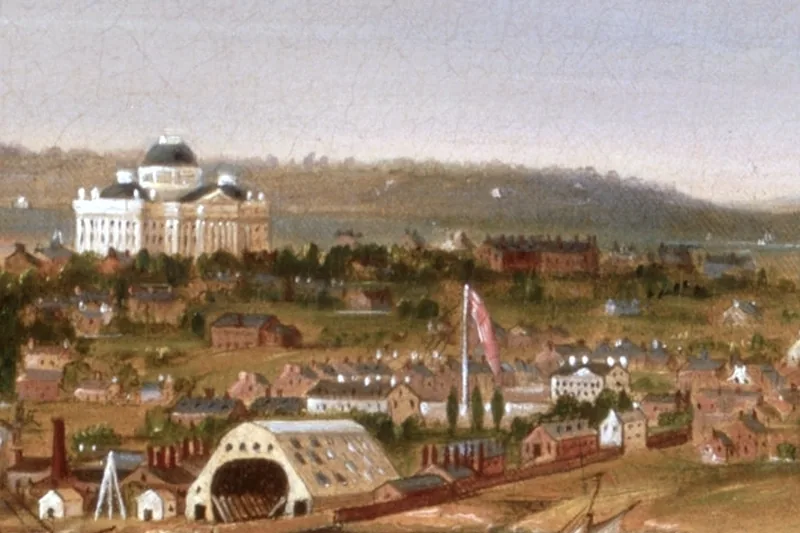 Law and constitutionsMagna Carta: the liberties of the citiesKing John of England, published 1215The clause granting London and every other town and port their ancient liberties and free customs.medium242 characters
Law and constitutionsHuman Rights Declaration, Articles 1 and 2United Nations General Assembly, published 1948The two opening articles, on dignity and reason and on rights without distinction.hard431 characters
Law and constitutionsMagna Carta: the liberties of the citiesKing John of England, published 1215The clause granting London and every other town and port their ancient liberties and free customs.medium242 characters
Law and constitutionsHuman Rights Declaration, Articles 1 and 2United Nations General Assembly, published 1948The two opening articles, on dignity and reason and on rights without distinction.hard431 characters
 Law and constitutionsUS Constitution, Article III: the courtsConstitutional Convention, published 1787The clause that creates the Supreme Court and protects the standing of judges.hard405 characters
 Law and constitutionsUS Constitution, Article VI: the supreme lawConstitutional Convention, published 1787The supremacy clause, binding judges in every state to the Constitution, federal law, and treaties.medium359 characters