Under the Greenwood Tree, singing in the lane
You are typing on the on-screen keyboard. Tap the text to open it and begin.
Caps Lock is on. Every letter comes out capital, so the test counts it as a mistake.
Or simply start typing.
- Time so far
- 0
- Words per minute
- 0
- Accuracy
- 100%
Done. The text and your result
0 % of characters hit
Where you slip most often
Darker keys collected more mistakes in this run.
What slowed you down
The characters your finger missed most often.
Your recent results
Words per minute across your recent runs in this language.
What to type next
 ProseFar from the Madding Crowd, a clear skyThomas Hardy, published 1874A winter night sky over Norcombe Hill, where all the stars seem to beat as one body.easy401 characters
 ProseLittle Women, the gray dawn of ChristmasLouisa May Alcott, published 1868Jo wakes early on Christmas morning and finds the gift her mother promised.easy363 characters
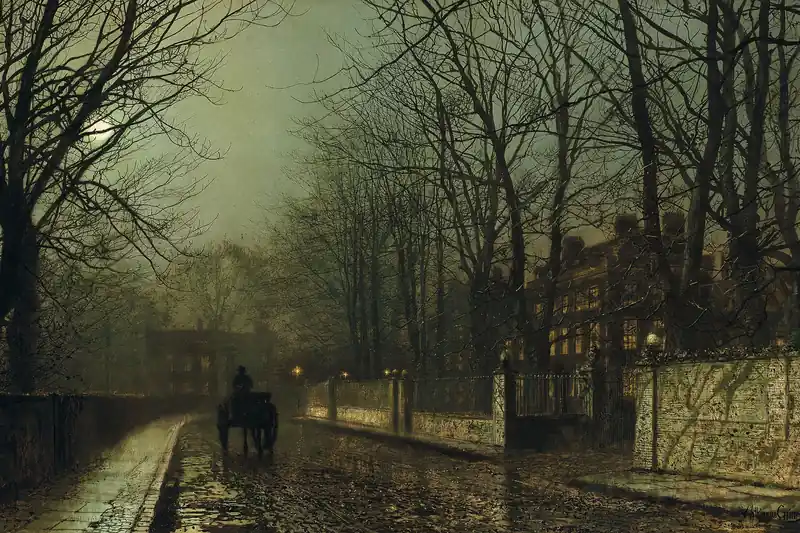
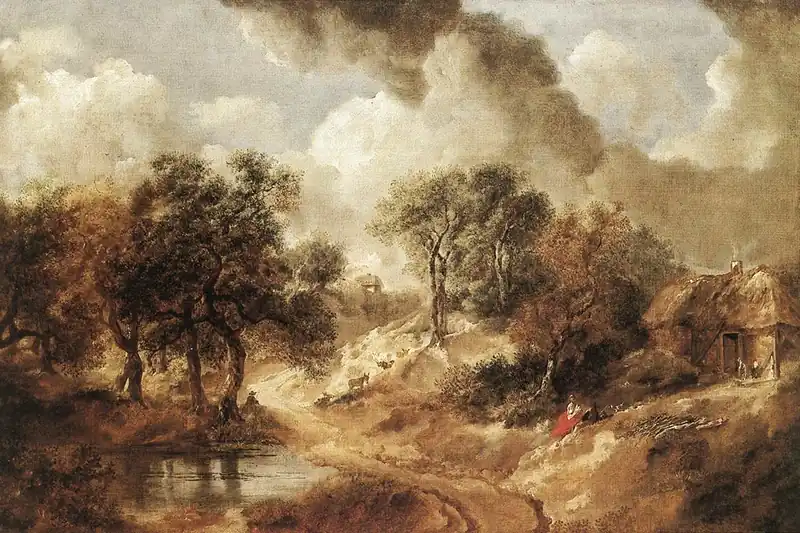 ProseEmma, the view from Donwell AbbeyJane Austen, published 1815A summer view of English fields and gardens from the grounds of Donwell Abbey.hard340 characters
Under the Greenwood Tree was Hardy’s second published novel, subtitled A Rural Painting of the Dutch School, a term he borrowed from picture galleries. The novel appeared in 1872. The village choir in the book is drawn from the one Hardy’s father and grandfather played in. Project Gutenberg carries the full novel.
Where this text comes fromHardy keeps the way people actually spoke. The passage carries dialect forms and folk names for things rather than the standard words a London editor would have preferred, and the edition linked below leaves them alone. That is a deliberate position and it caused him trouble: reviewers of his early novels complained about exactly this, and he went on doing it for forty years. The scene itself is a man walking a lane at night, which in this book is how nearly everything begins.
What you might not noticeThe passage uses daffodowndilly, a folk name for the daffodil, fourteen letters long and spelled as one word. It survives in the printed text rather than being corrected to the common name. Source
What it trainsTwo words in this passage are unlike anything else on the shelf. Daffodowndilly runs fourteen letters with no break and no pattern your fingers know, and a-sheep-shearing carries two hyphens inside sixteen characters. Both are folk forms rather than dictionary words, so spelling instinct gives you no help at all. Around them the sentences are long, two of them averaging forty-two words, with only three commas to divide 490 characters. Quotation marks appear once as a pair, and the closing one is the last character of the passage. Eight capitals, six inside sentences.
From our blogHow to Learn Touch Typing Without Bad Habits
Public domain status: published in 1872, more than 125 years ago. public domain, Project Gutenberg
More texts in this category
ProseLittle Women, the gray dawn of ChristmasLouisa May Alcott, published 1868Jo wakes early on Christmas morning and finds the gift her mother promised.easy363 characters
ProseEmma, the view from Donwell AbbeyJane Austen, published 1815A summer view of English fields and gardens from the grounds of Donwell Abbey.hard340 characters
 ProseEmma, the village of HighburyJane Austen, published 1815A short portrait of Highbury and of the place the Woodhouse family holds in it.medium428 characters
ProsePersuasion, the walk down to the sea at LymeJane Austen, published 1818The party from Uppercross settles at an inn in Lyme and goes straight down to the shore.easy260 characters
ProseEmma, the village of HighburyJane Austen, published 1815A short portrait of Highbury and of the place the Woodhouse family holds in it.medium428 characters
ProsePersuasion, the walk down to the sea at LymeJane Austen, published 1818The party from Uppercross settles at an inn in Lyme and goes straight down to the shore.easy260 characters
 ProsePride and Prejudice, the park at PemberleyJane Austen, published 1813Elizabeth drives into the grounds of Pemberley and sees the wood and the rising ground.easy301 characters
ProseJane Eyre, morning at ThornfieldCharlotte Brontë, published 1847Jane wakes in her new room at Thornfield and finds the light and the furniture cheerful.easy434 characters
ProsePride and Prejudice, the park at PemberleyJane Austen, published 1813Elizabeth drives into the grounds of Pemberley and sees the wood and the rising ground.easy301 characters
ProseJane Eyre, morning at ThornfieldCharlotte Brontë, published 1847Jane wakes in her new room at Thornfield and finds the light and the furniture cheerful.easy434 characters