David Copperfield, the flats near Yarmouth
You are typing on the on-screen keyboard. Tap the text to open it and begin.
Caps Lock is on. Every letter comes out capital, so the test counts it as a mistake.
Or simply start typing.
- Time so far
- 0
- Words per minute
- 0
- Accuracy
- 100%
Done. The text and your result
0 % of characters hit
Where you slip most often
Darker keys collected more mistakes in this run.
What slowed you down
The characters your finger missed most often.
Your recent results
Words per minute across your recent runs in this language.
What to type next
 ProseA Christmas Carol, the shop windowsCharles Dickens, published 1843The grocer’s window in the Christmas market, seen through the eyes of a delighted narrator.hard246 characters
 ProseLittle Women, the gray dawn of ChristmasLouisa May Alcott, published 1868Jo wakes early on Christmas morning and finds the gift her mother promised.easy363 characters
 ProseEmma, the view from Donwell AbbeyJane Austen, published 1815A summer view of English fields and gardens from the grounds of Donwell Abbey.hard340 characters
David Copperfield appeared between 1849 and 1850 in nineteen monthly parts, the last a double number, and Dickens called it his favorite among his own books. He knew the Norfolk coast at first hand and thought Yarmouth one of the strangest places he had seen. The novel is written in the first person, which was new for him at that scale. Project Gutenberg carries the complete text.
Where this text comes fromA boy has been promised the seaside and is looking at a marsh. The whole passage is disappointment being registered politely, in the first person, by a narrator too young to say so directly, which is why the observation arrives as hedged qualification rather than complaint. Dickens knew this coast and thought it genuinely strange, so the flatness is not invention. What you copy is the moment of arrival, before anyone tells David what he is supposed to think about it.
What you might not noticeThe narrator calls the landscape spongy and soppy, two words that sound like a child’s vocabulary rather than a novelist’s, and the sentence keeps them because the whole book is narrated by a man recalling how he saw things as a boy. Source
What it trainsTwo sentences hold sixty-nine words between them, an average close to thirty-five, and two semicolons do the work that a full stop would normally do. Those semicolons need no Shift at all, so the only Shift work in the passage is its seven capitals, five of which sit inside sentences: four are the pronoun I and one is Yarmouth. Four commas. The difficulty is not any single word, since nothing here passes ten letters, but the length of the clauses: the first sentence changes its subject twice before it ends and the eye loses the thread.
From our blogHow to Learn Touch Typing Without Bad Habits
Public domain status: published in 1850, more than 125 years ago. public domain, Project Gutenberg
More texts in this category
ProseLittle Women, the gray dawn of ChristmasLouisa May Alcott, published 1868Jo wakes early on Christmas morning and finds the gift her mother promised.easy363 characters
ProseEmma, the view from Donwell AbbeyJane Austen, published 1815A summer view of English fields and gardens from the grounds of Donwell Abbey.hard340 characters
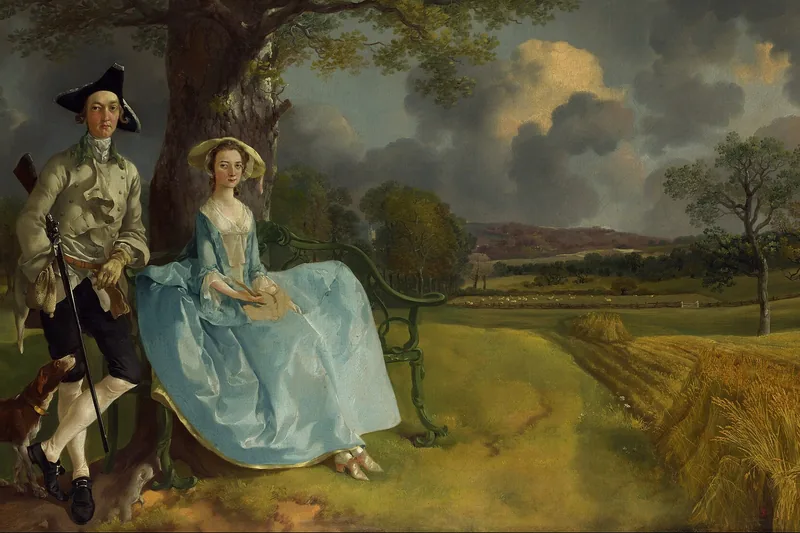 ProseEmma, the village of HighburyJane Austen, published 1815A short portrait of Highbury and of the place the Woodhouse family holds in it.medium428 characters
ProsePersuasion, the walk down to the sea at LymeJane Austen, published 1818The party from Uppercross settles at an inn in Lyme and goes straight down to the shore.easy260 characters
ProseEmma, the village of HighburyJane Austen, published 1815A short portrait of Highbury and of the place the Woodhouse family holds in it.medium428 characters
ProsePersuasion, the walk down to the sea at LymeJane Austen, published 1818The party from Uppercross settles at an inn in Lyme and goes straight down to the shore.easy260 characters
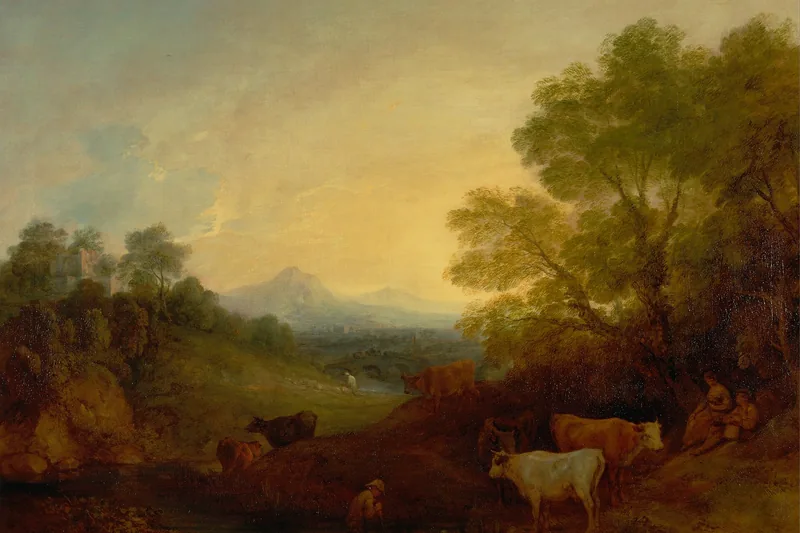 ProsePride and Prejudice, the park at PemberleyJane Austen, published 1813Elizabeth drives into the grounds of Pemberley and sees the wood and the rising ground.easy301 characters
ProseJane Eyre, morning at ThornfieldCharlotte Brontë, published 1847Jane wakes in her new room at Thornfield and finds the light and the furniture cheerful.easy434 characters
ProsePride and Prejudice, the park at PemberleyJane Austen, published 1813Elizabeth drives into the grounds of Pemberley and sees the wood and the rising ground.easy301 characters
ProseJane Eyre, morning at ThornfieldCharlotte Brontë, published 1847Jane wakes in her new room at Thornfield and finds the light and the furniture cheerful.easy434 characters