The Wind in the Willows: on the river
You are typing on the on-screen keyboard. Tap the text to open it and begin.
Caps Lock is on. Every letter comes out capital, so the test counts it as a mistake.
Or simply start typing.
- Time so far
- 0
- Words per minute
- 0
- Accuracy
- 100%
Done. The text and your result
0 % of characters hit
Where you slip most often
Darker keys collected more mistakes in this run.
What slowed you down
The characters your finger missed most often.
Your recent results
Words per minute across your recent runs in this language.
What to type next
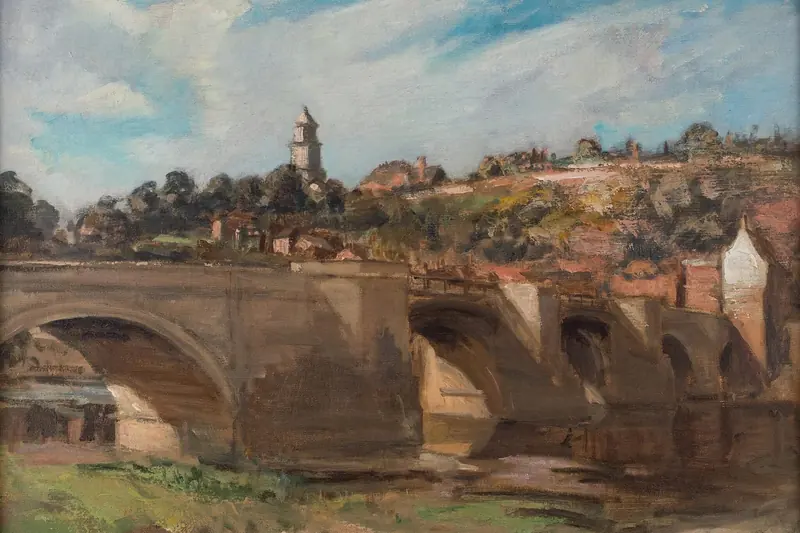 ProseThe Wind in the Willows, a frosty fieldKenneth Grahame, published 1908Sheep steam in the frosty air as two travelers hurry past in high spirits.medium293 characters
 Fables and talesThe Fox and the GrapesAesop, published 1867A famished fox tries every trick to reach the grapes, then calls them sour.medium303 characters
 ProseLittle Women, the gray dawn of ChristmasLouisa May Alcott, published 1868Jo wakes early on Christmas morning and finds the gift her mother promised.easy363 characters
The Water Rat and the Mole meet on the river in the first chapter, and the river stays the center of the book. Grahame knew the Thames from his childhood. He grew up at Cookham Dean in Berkshire and came back to the river as an adult. The 1908 edition had no pictures; the drawings people remember came from Ernest Shepard in 1931. Shepard visited the aging Grahame, who asked him to be kind to his animals.
Where this text comes fromThe Mole is not listening. Someone is talking to him throughout this passage and he hears none of it, because he has just met moving water for the first time and the narration stays inside his distraction rather than reporting the conversation. That choice is why the scene works: the reader is put in the same state as the character, aware that speech is happening and unable to attend to it.
What you might not noticeSomeone is speaking to the Mole through the whole of this passage and not one word of what he says is reported. The narration stays with the animal who is not listening. Source
What it trainsEight commas and two double quotation marks in 431 characters, across four sentences averaging twenty words. This edition sets its quotes as the plain vertical kind rather than the curly pairs most older texts here use, so the mark you press is the mark that appears, which is rarer on this site than you would expect. Seven capitals, three of them inside sentences. The longest word, intoxicated, is eleven letters and sits in the middle of the longest clause, at the point where the sentence has already changed subject once and the eye is working to keep up.
From our blogHow to Learn Touch Typing Without Bad Habits
Public domain status: the author died in 1932, so copyright has expired. public domain, Project Gutenberg
More texts in this category
Fables and talesThe Fox and the GrapesAesop, published 1867A famished fox tries every trick to reach the grapes, then calls them sour.medium303 characters
Fables and talesThe Hare and the TortoiseAesop, published 1867The hare mocks the tortoise, agrees to a race, and the tortoise keeps a steady pace.easy488 characters
 Fables and talesThe Milkmaid and Her PailAesop, published 1867The milkmaid counts eggs, chickens, a gown, and suitors before she has any of them.easy492 characters
Fables and talesThe North Wind and the SunAesop, published 1867The wind and the sun compete over a traveler’s cloak, and warmth wins.easy468 characters
Fables and talesAlice in Wonderland: down the rabbit holeLewis Carroll, published 1865Alice follows the rabbit into its hole and finds herself falling down a very deep well.easy329 characters
Fables and talesAlice in Wonderland: the little doorLewis Carroll, published 1865Alice finds a low curtain, a little door behind it, and a key that fits at last.easy230 characters
Fables and talesThe Milkmaid and Her PailAesop, published 1867The milkmaid counts eggs, chickens, a gown, and suitors before she has any of them.easy492 characters
Fables and talesThe North Wind and the SunAesop, published 1867The wind and the sun compete over a traveler’s cloak, and warmth wins.easy468 characters
Fables and talesAlice in Wonderland: down the rabbit holeLewis Carroll, published 1865Alice follows the rabbit into its hole and finds herself falling down a very deep well.easy329 characters
Fables and talesAlice in Wonderland: the little doorLewis Carroll, published 1865Alice finds a low curtain, a little door behind it, and a key that fits at last.easy230 characters