Jefferson’s First Inaugural: a civic creed
You are typing on the on-screen keyboard. Tap the text to open it and begin.
Caps Lock is on. Every letter comes out capital, so the test counts it as a mistake.
Or simply start typing.
- Time so far
- 0
- Words per minute
- 0
- Accuracy
- 100%
Done. The text and your result
0 % of characters hit
Where you slip most often
Darker keys collected more mistakes in this run.
What slowed you down
The characters your finger missed most often.
Your recent results
Words per minute across your recent runs in this language.
What to type next
 Speeches and historyJefferson’s First Inaugural: frugal governmentThomas Jefferson, published 1801Jefferson’s short definition of a government that restrains harm and then leaves people alone.medium377 characters
 Speeches and historySusan B. Anthony: it was we, the peopleSusan B. Anthony, published 1873Anthony reads the preamble back to her audience and asks who the words we the people cover.easy318 characters
 ProseLittle Women, the gray dawn of ChristmasLouisa May Alcott, published 1868Jo wakes early on Christmas morning and finds the gift her mother promised.easy363 characters
This passage closes the list of principles Jefferson thought held the country together. He calls them the text of civic instruction, which in 1801 meant teaching people how to be citizens. Later he founded the University of Virginia and put that on his tombstone instead of the presidency. The whole address is short, about seventeen hundred words.
Where this text comes fromCreed is a religious word and it is doing religious work here, applied to politics on purpose. The sentence lists what a set of principles should become: something recited, something taught, something used to test whether a public servant is doing his job. That last function is the sharp one, because it turns a statement of belief into a measuring instrument. The whole thing is one sentence and it never raises its voice.
What you might not noticeThe passage contains exactly one capital letter, the one that begins it. Fifty-nine words pass without another, which for a presidential address is close to unheard of. Source
What it trainsOne sentence, fifty-nine words, five commas and a single semicolon in 313 characters, with the full stop arriving only at the very end. There is one capital letter in the whole passage and it is the first character, so after the opening keystroke the Shift key is never needed again. Nothing is hyphenated, nothing is quoted, and no word exceeds eleven letters. The clauses are built in parallel, each one naming a further use for the same set of principles, which means the shape repeats and the eye starts predicting the next phrase from the last. That is where errors appear: not in any difficult character, but in the moment you stop reading and start remembering.
From our blogHow to Learn Touch Typing Without Bad Habits
Public domain status: published in 1801, more than 125 years ago. public domain, Wikisource
More texts in this category
Speeches and historySusan B. Anthony: it was we, the peopleSusan B. Anthony, published 1873Anthony reads the preamble back to her audience and asks who the words we the people cover.easy318 characters
 Speeches and historyFaraday: the open door of natural philosophyMichael Faraday, published 1861Faraday tells his young audience why a candle is the best way into natural philosophy.easy460 characters
Speeches and historyJefferson’s First Inaugural: frugal governmentThomas Jefferson, published 1801Jefferson’s short definition of a government that restrains harm and then leaves people alone.medium377 characters
Speeches and historyFaraday: the open door of natural philosophyMichael Faraday, published 1861Faraday tells his young audience why a candle is the best way into natural philosophy.easy460 characters
Speeches and historyJefferson’s First Inaugural: frugal governmentThomas Jefferson, published 1801Jefferson’s short definition of a government that restrains harm and then leaves people alone.medium377 characters
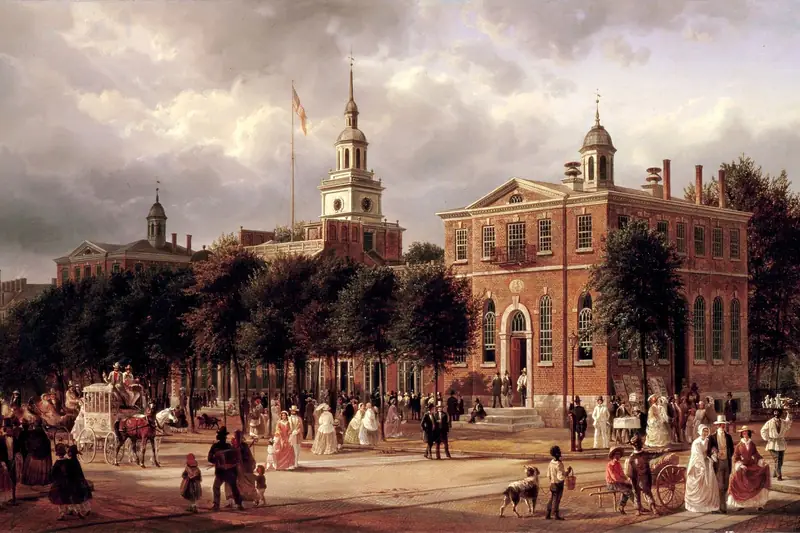 Speeches and historyDeclaration of Sentiments, Seneca FallsElizabeth Cady Stanton, published 1848The opening claim of the Seneca Falls declaration, that men and women are created equal.medium337 characters
 Speeches and historyWashington’s Farewell Address: good faithGeorge Washington, published 1796A call to keep good faith and justice toward every nation and to set that example.medium399 characters
 Speeches and historyWashington’s Farewell Address: on knowledgeGeorge Washington, published 1796Washington asks the country to build institutions for the general spread of knowledge.medium240 characters